
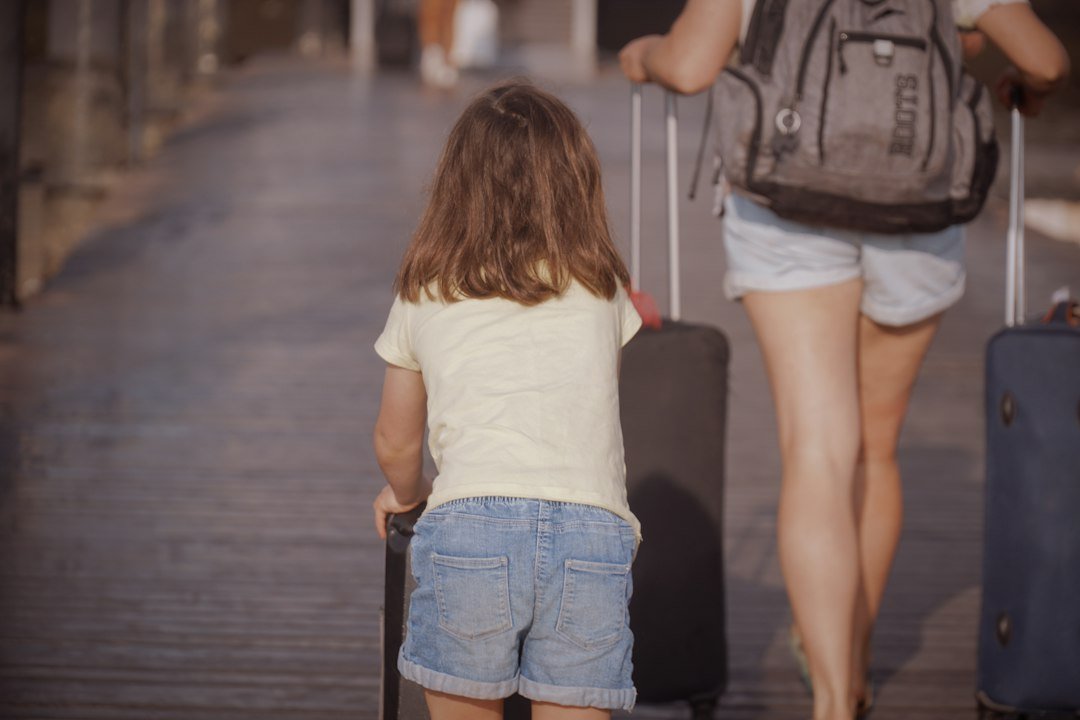


Moving abroad with kids sounds exciting when you say it quickly.
New country. New school. New language. New food. New adventures.
And yes, all of that can be true. But when you are the parent responsible for the passports, the school records, the packing, the medical paperwork, the airport bags, the emotional meltdowns and somehow remembering which suitcase has the pajamas in it, the “adventure” starts looking a lot more like project management.
I know because I have done family moves across countries myself. We moved as a family through South Korea, China and eventually the United States, and every move taught me something I wish I had known before the one before it.
So this is not a perfect-parent guide. It is the practical version: what actually matters when you are moving abroad with children, what is easy to forget, and what can make the first few weeks feel less chaotic.
Start with the boring things first
I know nobody dreams about visas, vaccination records and school transcripts when they imagine life abroad, but these are the things that can slow down an entire move.
Before you get too excited about neighborhoods and furniture, make one folder — digital and physical — for the documents your family may need.
At minimum, I would keep copies of:
- passports
- visas or residence documents
- birth certificates
- marriage documents if relevant
- school records and report cards
- vaccination and medical records
- prescriptions
- insurance documents
- emergency contacts
- important translations, certifications or apostilles if your destination requires them
The exact requirements depend on the country, so always check official government and school information for your specific move. But having everything organized before you leave saves a ridiculous amount of stress later.
School should be part of the moving plan, not an afterthought
This is one of the biggest differences between moving alone and moving with children.
Your housing, commute and even the date you arrive may depend on school.
Before committing to a neighborhood, check what school options are actually available. Public, private and international schools can all have completely different admission timelines and requirements.
Ask schools exactly what they need from your current school. Do not assume “school records” means the same thing everywhere. One school may want transcripts. Another may want teacher comments, standardized test results, vaccination proof, language assessments or a formal leaving certificate.
And keep your own copy of everything.
I have learned not to rely on the idea that one school can simply email another later. Sometimes they can. Sometimes somebody is on holiday, somebody changed jobs, or the system you used two countries ago suddenly cannot be accessed.
Do not ship everything your child loves
This sounds obvious until moving week arrives and suddenly the favorite stuffed animal is somewhere inside a shipping container.
Keep a small “first weeks” bag for each child.
Not just travel-day things. I mean enough familiar items to survive the period before your shipment arrives or before your new home feels normal.
That could include:
- a favorite toy or blanket
- a few familiar books
- favorite pajamas
- a comfort snack if you can legally bring it
- a tablet or activity kit
- a few family photos
- medications
- several changes of clothes
Children do not care that the sofa is delayed. They care that bedtime still feels like bedtime.
Tell them the truth, but in a way they can understand
Children notice far more than we sometimes think.
If the adults are whispering about movers, flights and paperwork, they know something is happening.
I think it is better to explain the move honestly and simply. Tell them what will change, but also what will stay the same.
“We are moving to a new country” can feel enormous.
“You will have a new room, we will still eat breakfast together, you can bring your favorite toys, and we will call Grandma on Sundays” feels much more manageable.
Give them small choices where you can. Which toys go in the airplane bag? Which bedsheets should we pack first? Which photo should go beside the new bed?
They cannot control the move, but tiny decisions can help them feel included in it.
Expect the emotional part to arrive later
Sometimes children are completely fine during the move itself.
Airport? Fine.
New apartment? Exciting.
First day of school? Surprisingly okay.
Then three weeks later, everything falls apart because the cereal tastes different.
That does not necessarily mean the move was a mistake. Adjustment is strange. Adults do it too — we are just better at pretending we are upset about something more sophisticated than cereal.
Try to keep routines where possible, especially sleep, meals and familiar family rituals. A new country already provides enough novelty.
Pack for the life you will actually have
Before every international move, there is a moment when you look at an object and think, “But what if we need this?”
This is how people accidentally move seventeen mugs across continents.
Think about your destination realistically.
Will your new home be smaller? Is storage limited? Are certain products much cheaper there? Will your electrical appliances even work? How expensive is international shipping compared with simply replacing something?
For children, I would prioritize sentimental and hard-to-replace things over ordinary items.
A favorite handmade blanket? Probably worth bringing.
A giant plastic toy kitchen that can be bought again locally? Maybe not.
Use local cultural centers before you move
One thing that helped me before our move from the UAE to South Korea was looking for Korean resources while I was still in Abu Dhabi.
I found the Korean Cultural Center in the UAE, and it turned out to be much more useful than I expected. I picked up Korean-English newsletters there, found information about Korean moving companies, and discovered language programs for people who wanted to start learning Korean before moving.
I actually wanted to join one of the Korean-language programs, but the schedule did not work with mine at the time. Still, even just visiting the center gave me useful information and made the move feel less abstract.
If you are moving somewhere new, I would absolutely check whether your destination country has a cultural center, embassy program, language institute or expat resource in the city you currently live in. You may find practical information there that never appears in a normal Google search.
Get several relocation quotes before choosing a mover
Do not take the first international moving quote you receive.
Relocation prices can vary a lot depending on the company, what is included, insurance, packing, customs handling, storage and how your shipment is calculated.
I would get multiple written quotes and compare them carefully. Ask what is included, what is not, whether customs charges can appear later, what happens if your shipment is delayed and what insurance actually covers.
The cheapest quote is not automatically the best one, but neither is the most expensive. You want to understand exactly what you are paying for before your belongings leave the country.
Plan your first month, not just moving day
People spend months preparing for the flight and surprisingly little time thinking about Tuesday afternoon two weeks later.
Your first month may include:
- school registration
- doctor visits
- opening bank accounts
- buying household basics
- getting local phone service
- learning transportation
- figuring out grocery stores
- meeting teachers
- finding activities for the kids
Do not schedule every day full.
Leave space to be tired.
International moves are exciting, but they are exhausting in a very specific way. Even simple errands take longer when you do not yet understand how anything works.
Make a “first 48 hours” plan
This is one of the easiest things to prepare and one of the most useful.
Before you fly, know:
- how you are getting from the airport
- where you are sleeping
- how you will get food
- whether you will have phone data
- where important medicines are packed
- what your child will need for the first school day
- how you will access money
The goal is not to organize your new life in 48 hours. It is simply to avoid making major decisions while jet-lagged, hungry and surrounded by suitcases.
Do not underestimate the parent adjustment either
A lot of moving-abroad advice focuses on helping children adapt, which is important. But parents are adjusting too.
You may be rebuilding your social circle, learning a new system, trying to support your child, handling paperwork and wondering why something as simple as buying the correct laundry detergent suddenly requires research.
Give yourself some grace.
You do not have to love your new country immediately.
You also do not have to decide in the first month whether it was the best decision of your life.
Some places grow on you slowly.
Things I would prepare before every family move now
If I were moving abroad with my family again, I would prepare these before anything else:
- one organized family-document folder
- digital backups of every important document
- school records requested early
- medical and vaccination records
- a realistic first-month budget
- a separate suitcase for the first two weeks
- local phone/data access arranged as early as possible
- temporary accommodation that is practical, not just pretty
- one familiar routine for my child that continues after the move
- a list of things that can wait
That last one matters more than it sounds.
Not everything has to be solved immediately.
Moving abroad with kids is not about making everything perfect
It is about making the transition feel safe enough while everyone figures things out.
Your child may miss home. You may miss home too. They may love the new country before you do, or you may fall in love with it while they need more time.
That is normal.
The best thing I have learned from moving countries is that “home” becomes surprisingly flexible. Children can build routines, friendships and memories in places that once felt completely unfamiliar.
And eventually the strange supermarket becomes your supermarket. The confusing school route becomes automatic. The apartment starts looking lived in. Somebody discovers a favorite café. Life begins again.
If you are planning a move now, start with my Moving Abroad Guides & Resources page. I am building it into a practical library of checklists, family moving resources and things I genuinely wish I had before our own international moves.