

Updated November 2026 for Americans planning a move in 2027.
Moving abroad sounds wonderfully simple when it is reduced to a sentence: choose a country, pack your bags and go.
Then immigration law enters the conversation.
I have lived abroad for years myself, from the UAE to South Korea, then China, and now the United States, and one thing I have learned is that there is a huge difference between a country being easy to visit and a country being realistic to actually live in.
That difference matters a lot in this guide.
How I researched this guide and what “easy to move to” actually means
I went back through this article country by country and checked current government immigration, foreign-ministry, consular or official residence-program sources in November 2026. I did not want to repeat old visa numbers from blogs or mix up tourist entry with residency.
So throughout this guide I distinguish between:
- Visa-free entry: you may enter without obtaining a visa in advance, but only for the permitted visitor period.
- A visitor visa or eVisa: permission to enter for tourism or another short stay. This usually does not give you the right to live there indefinitely or work locally.
- A temporary residence permit: permission to actually reside in the country for a longer period, usually based on remote work, employment, retirement, business, family, study or another qualifying reason.
- Permanent residence: a much stronger long-term status. Not every temporary visa leads to it.
- Citizenship: a separate process again. Living somewhere for a year does not automatically make you a citizen unless that country’s law specifically provides a path and you meet all the requirements.
A country giving Americans 90 days visa-free is nice for testing the waters. It is not the same thing as saying Americans can simply move there and stay.
I have also avoided pretending that every route fits everyone. A retirement visa is useless to a 32-year-old remote worker. A skilled-worker route may be wonderful for a nurse or engineer but irrelevant to someone living on investment income. A digital-nomad visa may let you work for a U.S. employer but specifically forbid taking a local job.
Immigration rules also change. Where a rule is especially important, I have linked the official source so you can check the current requirement when you are ready to apply.
23 best countries for Americans moving abroad in 2027
| Country | Useful short-stay advantage | Realistic longer-stay route |
|---|---|---|
| Albania | Up to 1 year visa-free for U.S. citizens | Residence permit if staying longer, working or studying |
| Georgia | Up to 1 full year visa-free | Residence routes for qualifying work, business, family and other purposes |
| United Arab Emirates | Easy short visits for Americans | Virtual Work Visa, Green Visa, employment residence |
| Portugal | Schengen short stay | Passive-income/retirement and remote-work residence routes |
| Spain | Schengen short stay | Digital Nomad Visa or Non-Lucrative Visa |
| Italy | Schengen short stay | Digital Nomad / Remote Worker Visa |
| Croatia | Schengen short stay | Digital-nomad temporary residence up to 18 months |
| Slovenia | Schengen short stay | Digital-nomad temporary residence up to 1 year |
| Netherlands | Schengen short stay | Dutch-American Friendship Treaty for qualifying entrepreneurs |
| Ireland | Visitor permission up to 3 months | Stamp 0 for qualifying people of independent means |
| Bosnia & Herzegovina | 90 days visa-free in a 180-day period | Temporary residence with a qualifying legal basis |
| Mexico | Close to the U.S. and easy to explore first | Temporary or permanent residence |
| Costa Rica | Popular extended-stay destination | Digital Nomad program |
| Panama | Easy access from the U.S. | Pensionado and Friendly Nations routes |
| Brazil | Visitor eVisa available to Americans | Digital Nomad residence and family-reunification routes |
| South Korea | Strong infrastructure for an initial stay | F-1-D Workation / Digital Nomad Visa |
| Taiwan | Convenient for globally mobile professionals | Digital Nomad Visa up to 2 years |
| Thailand | Easy to visit and test different regions | Destination Thailand Visa for eligible remote workers |
| Malaysia | 90-day visitor access for many Americans | Malaysia My Second Home (MM2H) |
| Ecuador | Americans generally get a tourist stay | Digital Nomad and other temporary-residence categories |
| Australia | Good country to explore before committing | Skilled Independent 189 and other skilled pathways |
| New Zealand | Easy cultural transition for many Americans | Skilled Migrant Category Resident Visa |
| Tunisia | 90 days visa-free for U.S. citizens | Residence permit for longer stays |
1. Albania: one of the easiest European countries for Americans to test properly
Albania deserves a very serious look because U.S. citizens can currently stay for up to one year without a visa. That is unusually generous compared with most of Europe.
This means an American can spend real time in Tirana, Saranda or another part of the country and see whether daily life actually works before committing to a formal residence process.
But here is the important distinction: the one-year visa-free period is still a visitor privilege. If you want to stay beyond a year, work or study, you need the appropriate residence permit.
Best for: people wanting a long European trial period without immediately applying for residence.
The catch: one year visa-free does not automatically equal work authorization or permanent residence.
Official U.S. travel and entry information for Albania
2. Georgia: another unusually easy one-year test
Georgia is another country where Americans can currently enter and stay visa-free for one full year. The United States is specifically included on Georgia’s official one-year visa-exemption list.
That makes Georgia very attractive for people who want time to decide whether living abroad actually suits them rather than making a permanent decision after a two-week vacation.
Tbilisi offers city life, cafés, restaurants and an international community, while housing and daily expenses can still be considerably lower than in many major U.S. or Western European cities.
Best for: remote earners and people who want a low-pressure first experiment with living abroad.
The catch: your right to remain as a visitor does not automatically answer questions about local employment, tax residence or permanent status.
Georgia’s official visa-exemption information
3. United Arab Emirates: extremely convenient if your income matches the lifestyle
I lived in the UAE for years, including Dubai and Abu Dhabi, so this is one country on the list where my opinion is based on actual daily life rather than a relocation brochure.
The UAE can be wonderfully easy to live in. Banking, deliveries, transportation, private healthcare, international schools and everyday services are built around an enormous expatriate population.
For people employed outside the UAE, the country currently offers a one-year Virtual Work Residence Visa. The official requirement includes proof of foreign employment and a salary of at least US$3,500 per month. There is also a renewable five-year Green Visa for eligible skilled workers, freelancers, self-employed people and investors, plus normal employer-sponsored residence.
Best for: professionals, remote employees, entrepreneurs and families with enough income for housing and schooling.
The catch: Dubai in particular can become expensive very quickly once rent, school fees and lifestyle spending enter the equation.
UAE Virtual Work Residence Visa · UAE Green Visa
4. Portugal: still attractive, but choose the visa that matches how you earn money

Portugal remains popular for good reason, but its different residence routes are often mashed together online as if they were interchangeable.
Portugal has a route for retirees and people living on their own recurring income, and a separate framework for people working remotely for employers or clients outside Portugal. The remote-work residence permit issued through that route is currently valid for two years and renewable for successive three-year periods.
Best for: retirees, people with stable recurring income and established remote workers.
The catch: Lisbon, Porto and the most popular coastal areas are no longer the bargain many older expat articles describe.
Portugal’s official residence information for retirees and people living on their own income · Portugal remote-work residence information
5. Spain: excellent options, but the Non-Lucrative Visa is not a remote-work visa
Spain now gives us a perfect example of why I rewrote this article.
The Non-Lucrative Visa is for people with sufficient financial means who plan to reside in Spain without working. Spain’s own consular guidance explicitly says that it does not allow professional activity, including remote work.
If you plan to keep working online, Spain has a separate Telework or Digital Nomad Visa for qualifying remote employees and professionals.
The appeal is obvious: Mediterranean life, access to the rest of Europe and many cities beyond Madrid and Barcelona.
Best for: remote professionals, financially independent people and families wanting a European base.
The catch: make sure your residence category actually matches what you intend to do for work.
Spain Digital Nomad Visa · Spain Non-Lucrative Visa
6. Italy: finally a real route for qualified remote professionals
Italy used to be one of those places people dreamed of moving to and then discovered that loving pasta and old balconies was not technically an immigration category.
Italy now has an official Digital Nomad / Remote Worker Visa for highly specialized non-EU professionals. Applicants need to document qualifying professional skills or experience, income, health insurance, accommodation and prior experience in the field.
After entering Italy on the national visa, the holder applies for a residence permit.
Best for: established remote professionals with strong documentation.
The catch: this is not a casual “I own a laptop” visa. Italy deliberately limits it to highly qualified workers.
Italy Digital Nomad / Remote Worker Visa
7. Croatia: an Adriatic base with up to 18 months for digital nomads
Croatia’s digital-nomad temporary residence is one of the clearer European programs. It is available to non-EU/EEA/Swiss citizens who work remotely for a foreign employer or their own company outside Croatia.
The current rules allow temporary stay for up to 18 months. Proof of income or savings, health insurance, a clean criminal record and an address in Croatia are part of the process.
Best for: remote workers who want to spend a substantial period in Europe without pretending they are merely tourists.
The catch: it is a temporary nomad route, not an automatic permanent-residence shortcut.
Croatia official digital-nomad residence information
8. Slovenia: a newer digital-nomad option with family reunification
Slovenia introduced its digital-nomad residence permit in November 2025, making it one of the newer options on this list.
The permit can be issued for up to one year to non-EU/EEA citizens working remotely for a company or business established outside Slovenia. It cannot simply be renewed, although a person can later qualify under another residence category. Family members can join immediately under a more favorable reunification rule.
Best for: remote workers who want a smaller, green European base with easy access to neighboring countries.
The catch: the digital-nomad permit itself is deliberately temporary.
Slovenia official digital-nomad permit information
9. The Netherlands: unusually interesting for American entrepreneurs
The Netherlands belongs on an American-specific list because of the Dutch-American Friendship Treaty, usually shortened to DAFT.
Eligible U.S. citizens who genuinely establish and operate a business in the Netherlands can apply under the treaty’s self-employed residence route. The Dutch immigration authority currently says that for most business forms, the minimum substantial-capital investment is €4,500.
The permit can be valid for up to two years and may be extended if the conditions continue to be met.
Best for: freelancers, consultants and real small-business owners.
The catch: this is a business-based residence route. It is not meant for someone who creates a company on paper and then does nothing with it.
Dutch immigration authority: DAFT and self-employed residence
10. Ireland: an English-speaking option for people who are genuinely financially independent
Ireland can feel culturally easier for Americans than many other destinations, but its independent-means route has a high financial bar.
For retirees or people of independent means, Ireland’s Stamp 0 route currently recommends individual annual income of around €50,000 plus access to a substantial lump sum for unexpected expenses. Private medical insurance is also required.
Stamp 0 generally does not allow you to work, run a business or practice a profession unless your permission specifically says otherwise.
Best for: retirees and financially independent people who do not need to work.
The catch: this is not Ireland’s version of a digital-nomad visa, and housing costs can be substantial.
Ireland official retirement / independent-means information
11. Bosnia & Herzegovina: affordable and interesting, but residency needs a real legal basis
Bosnia was suggested while I was rebuilding this article, and after checking the rules, I think it deserves a place, as long as I explain it honestly.
U.S. citizens can currently stay visa-free for up to 90 days within a 180-day period. That is useful for spending enough time in Sarajevo, Mostar or another part of the country to decide whether you actually like the lifestyle.
Longer temporary residence is different. Bosnia lists grounds including family reunification, education, employment, humanitarian reasons and other justified reasons. Temporary residence based on real-estate ownership can exist exceptionally when an effective connection to Bosnia and Herzegovina is established. Permanent residence may become possible after five years of qualifying continuous temporary residence.
Best for: people with a legitimate work, family, property or other qualifying connection who want a lower-cost Balkan base.
The catch: Bosnia currently does not offer the clean plug-and-play digital-nomad route that Croatia or Slovenia does.
Bosnia and Herzegovina official information for foreigners
12. Mexico: close enough to home to make an international move feel less extreme
Mexico remains one of the most practical countries for Americans because it is geographically close, enormously diverse and already home to established American and international communities.
If you want to live there for longer than a tourist stay, Mexico has temporary and permanent residence routes based on factors such as economic solvency, family links and other qualifying grounds. Temporary residence is generally intended for people staying more than 180 days and less than four years.
Financial thresholds are updated and can vary by consular office, so I would always use the consulate where you will actually apply rather than copying a dollar figure from an old article.
Best for: retirees, remote workers with qualifying income, families wanting proximity to the U.S. and people who want a huge choice of climates and lifestyles.
The catch: “moving to Mexico” is almost too broad to be useful. Mexico City, Mérida, Oaxaca, San Miguel de Allende and a coastal town can offer completely different lives.
Mexico temporary-residence information
13. Costa Rica: a genuine remote-work program, not just a tropical daydream
Costa Rica has one of the clearer programs for people working remotely for employers or clients outside the country.
The official Digital Nomad program currently requires at least US$3,000 per month from outside Costa Rica for a solo applicant, or US$4,000 when bringing dependents. The authorized stay is one year and can be renewed for another year if the conditions are met.
Best for: established remote workers who want nature, warm weather and easier travel back to the United States.
The catch: Costa Rica is no longer universally cheap. Popular coastal and expat areas can be surprisingly expensive.
Costa Rica official Digital Nomad requirements
14. Panama: especially strong for retirees and certain qualifying nationals
Panama is still very relevant for Americans, especially because of its established retirement program and the Friendly Nations residence category.
The Pensionado route currently requires a lifetime pension of at least US$1,000 per month, with additional requirements for dependents. The United States also remains specifically included on Panama’s current Friendly Nations list.
One important correction to older articles: Friendly Nations residency is no longer the ultra-simple “open a bank account and you are done” route it once was. The program has changed over time and applicants need to meet the current qualifying conditions. A residence permit also does not automatically replace any separate work-permit requirement.
Best for: retirees and Americans who fit one of the current Friendly Nations qualifying bases.
The catch: read the current rules rather than a pre-2021 expat blog describing the old program.
Panama Pensionado information · Panama National Immigration Service
15. Brazil: remote work, family residence and a genuinely interesting citizenship angle

Brazil is one of the most interesting additions to this update, but it needs careful explanation because several completely different immigration rules are involved.
First, Americans currently need an eVisa to visit Brazil. The visa requirement for U.S., Canadian and Australian passport holders resumed on April 10, 2025. A visitor stay is normally up to 90 days and does not itself give you residence.
Separately, Brazil has a Digital Nomad temporary visa/residence category for people working remotely for an employer outside Brazil. The initial residence period can be up to one year.
What if an American has a baby in Brazil?
This is where Brazil becomes unusually interesting for some families.
Under Brazil’s Constitution, a child born in Brazil is generally Brazilian by birth, even when both parents are foreigners, unless the foreign parents are in Brazil in the service of their own country.
A foreign parent who has a Brazilian child is also one of the categories eligible to seek family-reunification residence.
And yes, having a Brazilian child can significantly shorten the naturalization timeline for a parent, but it is important not to turn that into the internet version of “have a baby and get an instant passport.”
The normal residence requirement for ordinary naturalization is four years. Brazil reduces that requirement to one year for someone who has a Brazilian child. However, the applicant still has to establish the required qualifying residence in Brazil, demonstrate Portuguese ability and meet the other naturalization conditions. For the one-year route, the relevant residence period is the year immediately before the naturalization application, and Brazil limits absences during that qualifying year.
So a family could leave Brazil after the birth and potentially return later; the child does not stop being Brazilian. But the parent would still need to establish the qualifying residence period before applying for naturalization. It is a real legal pathway, not automatic citizenship for the parents.
Best for: remote workers and families for whom Brazil genuinely fits as a place to live, not merely as a passport strategy.
The catch: visitor status, residence through a Brazilian child and citizenship are three separate legal steps.
Brazil eVisa for U.S. visitors · Brazil Digital Nomad residence · Brazil ordinary naturalization rules
16. South Korea: a country I know personally, now with a much more useful remote-work route
South Korea is now easier to include in a practical relocation list because its F-1-D Workation Visa has matured beyond the original pilot idea.
As of 2026, qualifying remote workers can receive a one-year stay and can extend in one-year increments up to a total of three years. The income requirement varies depending on age and whether the person lives in the Seoul metropolitan area or in certain non-metropolitan or population-declining regions.
This matters because Korea is a country where excellent infrastructure can make everyday life remarkably convenient once you understand the systems.
I lived in Seoul for four years, so this is also a country I will cover separately in much more detail, including the parts that immigration pages never tell you.
Best for: established remote professionals who like highly connected city life, safety, public transportation and modern infrastructure.
The catch: language, housing systems and cultural adjustment can be much more significant than the visa paperwork.
Official Korean embassy F-1-D Workation Visa information
17. Taiwan: up to two years for qualifying digital nomads
Taiwan’s Digital Nomad Visa is another newer option worth watching closely.
The current program starts with a six-month stay. Eligible holders can apply for six-month extensions, up to a maximum total stay of two years. It is specifically intended for people working remotely for overseas companies or operating international businesses independently, and holders are not allowed to work for Taiwanese domestic employers under this visa.
Best for: globally mobile professionals who want strong infrastructure, food, public transportation and a major Asian base.
The catch: this is a remote-work permission, not authorization to join the Taiwanese local labor market.
Taiwan official Digital Nomad Visa information
18. Thailand: the Destination Thailand Visa changed the conversation
Thailand has long been popular with remote workers, and the Destination Thailand Visa (DTV) gives eligible people a much more formal way to stay. It is technically a long-term tourist visa rather than a residence permit.
The DTV is valid for five years with multiple entries. It allows stays of up to 180 days per entry, and an extension of up to another 180 days may be available for that entry. The workcation category covers qualifying digital nomads, remote workers, foreign talent and freelancers, with documentation showing overseas employment or professional activity.
Best for: remote workers who want Southeast Asia and do not need a local Thai job.
The catch: a five-year visa validity does not mean you simply receive five uninterrupted years of residence. The permitted stay is structured around entries and extensions.
Thailand official DTV information
19. Malaysia: still appealing, but the current MM2H is much more expensive than old articles suggest
Malaysia remains attractive for quality of life, food, healthcare and the fact that English is widely used in many urban settings.
But the Malaysia My Second Home (MM2H) program has changed substantially, and this is exactly why old expat articles can be dangerous.
The current federal program has Silver, Gold, Platinum and special economic-zone categories. The standard Silver category currently requires a US$150,000 fixed deposit and qualifying property purchase; Gold requires US$500,000; Platinum requires US$1 million. Their permit terms also differ, from five years for Silver to longer renewable terms for higher tiers.
Best for: financially comfortable people genuinely seeking a long-term second home in Asia.
The catch: MM2H is no longer the inexpensive retirement-style program many people remember from years ago.
Malaysia official MM2H categories and requirements
20. Ecuador: an overlooked remote-work and residence option
Ecuador deserves more attention than it gets in American relocation discussions.
The country has an official temporary-residence category for remote work, aimed at foreigners working digitally for companies, employers or clients outside Ecuador. Its broader temporary-residence system also includes categories for retirees, investors, professionals and people with recurring income.
That makes Ecuador more useful for this article than simply saying Americans can visit for a few months. There are actual residence categories behind the lifestyle.
Best for: remote workers, retirees and people considering Latin America but wanting more residence options than a tourist extension.
The catch: choose the correct category for the way you earn your money; tourist status itself does not authorize local economic activity.
Ecuador official temporary-residence visa categories
21. Australia: not easy, but extremely valuable if you qualify
Australia stays on this list for a different reason. I would not call it an easy immigration destination. I would call it a very strong destination for people who actually qualify under skilled migration.
The points-tested Skilled Independent visa (subclass 189) can give successful applicants permanent residence. It does not require an employer sponsor, but you need an eligible occupation, a suitable skills assessment, enough points and an invitation to apply. Applicants must be under 45 at the time of invitation.
Best for: skilled professionals whose occupation and points profile fit Australia’s migration system.
The catch: this is competitive permanent migration, not a casual relocation visa.
Australia Skilled Independent 189
22. New Zealand: skilled residence with family inclusion
New Zealand is another country where the realistic route is more structured than a digital-nomad program.
Its Skilled Migrant Category Resident Visa is designed for people aged 55 or younger who are working in, or have an offer for, a qualifying skilled job with an accredited New Zealand employer and meet one of the current Skilled Migrant pathways.
The residence visa allows successful applicants to live, work and study indefinitely and can include a partner and dependent children who meet the rules.
Best for: skilled professionals whose careers match New Zealand’s labor and residence framework.
The catch: you generally need the right New Zealand job or job offer; this is not a visa for simply arriving and deciding you want to stay.
New Zealand Skilled Migrant Category Resident Visa
23. Tunisia: affordable Mediterranean living, but 90 days is still only a visitor stay
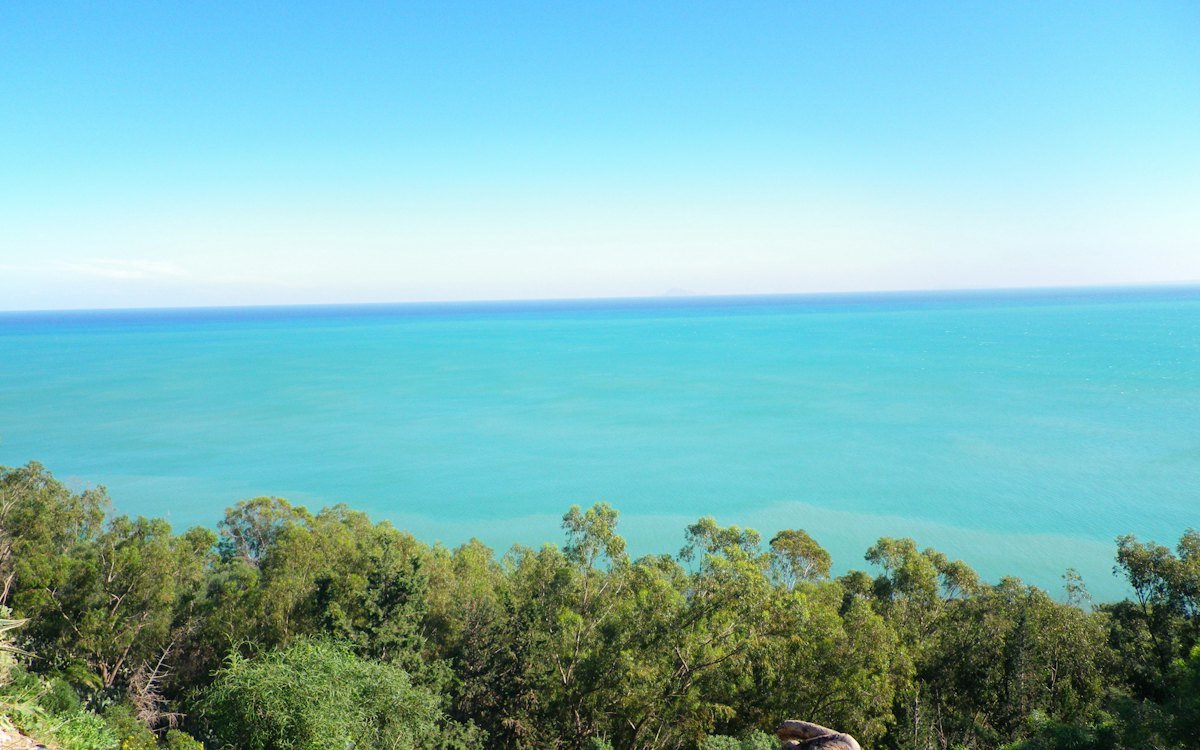
Tunisia is personal for me because it is home, and I think it is often overlooked when Americans compare Mediterranean lifestyles.
U.S. citizens currently do not need a visa for stays of 90 days or less. But again, I want to make the distinction clear: this is visitor status. If you want to stay in Tunisia for longer than 90 days, a residence permit is required.
Tunisia can offer Mediterranean beaches, historic towns, excellent food and a cost of living that can feel dramatically different from major U.S. cities. It also has strong French and Arabic influence and a lifestyle that will feel very different depending on whether you choose Tunis, the northern suburbs, Hammamet, Sousse or a smaller town.
Best for: people who are genuinely interested in North Africa and Mediterranean life rather than trying to recreate America somewhere cheaper.
The catch: bureaucracy and language can take adjustment, and the 90-day visa-free period should never be confused with long-term residence.
Current Tunisia entry and residence information for U.S. citizens
So which country is actually easiest for an American to move to?
There is no single answer, but we can narrow it down by situation.
- If you mainly want a long trial period: Albania and Georgia stand out because Americans can currently stay for up to one year visa-free.
- If you already work remotely: Costa Rica, Croatia, Slovenia, Spain, Portugal, Italy, Brazil, South Korea, Taiwan and Thailand all deserve research, depending on your income and professional profile.
- If you own a small business: the Netherlands deserves a serious look because DAFT is specifically useful to Americans.
- If you are retired or financially independent: Panama, Portugal, Ireland and some other residence categories may fit better than digital-nomad programs.
- If you have a strong skilled profession: Australia and New Zealand offer something many nomad visas do not: potential permanent residence from the beginning if you qualify.
- If you want maximum convenience and infrastructure: the UAE and South Korea are hard to beat, although neither is necessarily cheap.
Five questions to answer before choosing a country
- What legal category would I actually use? Do not choose the country first and invent the visa later.
- Can I legally earn money the way I currently earn it? Tourist permission and “non-lucrative” residence can restrict work.
- What happens after the first year? Can the permit renew? Can you change status? Does the time count toward permanent residence?
- Can my spouse and children come under the same route? Family rules can completely change which country makes sense.
- Would I still like this place on a boring Tuesday? Grocery shopping, school runs, healthcare, traffic, banking and bureaucracy matter more than the vacation photos once you actually live there.
Countries we researched and are watching but did not rank in the main 23
One thing I want this guide to do differently is show you not only what made the list, but also what I seriously researched and deliberately left out of the ranking for now.
That does not mean these countries are bad options. It means that, based on the information available in November 2026, I was not comfortable putting them in the same category as the 23 countries above without an important caveat.
Qatar: exceptional founder opportunities, but current regional security changes the recommendation
Qatar became much more interesting to me during this update because its startup and residency ecosystem has changed quickly.
The Startup Qatar Investment Program, provided through Qatar Development Bank, currently has two funding tracks. START is aimed at earlier-stage technology startups that already have a Proof of Concept or Minimum Viable Product (MVP) and want to establish operations in Qatar. GROW is for more established startups expanding into the country.
The advertised maximum funding is currently up to US$1.1 million through START and up to US$5.5 million through GROW. This is investment funding, not simply free cash handed to anyone who moves to Qatar, and funding may be released in stages tied to agreed business milestones.
Qatar also launched a long-term Entrepreneur Residency program in 2026. Overseas founders need endorsement from a recognized Qatari incubator and, among other requirements, an attested three-month bank statement showing a minimum balance of US$10,000. Approved entrepreneurs can receive self-sponsored long-term residency and sponsor qualifying family members.
For people with substantial capital, Qatar also has property-linked residence. A qualifying property worth more than QAR 730,000 can support sponsor-free real-estate residence in designated areas, while property valued above QAR 3.65 million can come with additional benefits associated with permanent-residency-card holders, subject to the program’s conditions.
So why is Qatar not in my main 23?
Because immigration opportunity is only one part of deciding where to move. As of October 23, 2026, the U.S. State Department rates Qatar Level 3, Reconsider Travel because of the risk of armed conflict in the region. The wider Middle East security situation remains unpredictable, with the possibility of sudden escalation, airspace disruption and flight cancellations.
That does not mean Qatar has suddenly stopped being a functioning place where expatriates live and work. It means that, for a guide called “best countries to move to,” I do not think it is responsible to rank Qatar alongside lower-risk options without making that security situation central to the recommendation.
Why I am still watching it: if regional conditions improve, Qatar could become one of the most interesting options on this entire list for founders, senior executives and well-capitalized investors.
Startup Qatar Investment Program · Qatar Entrepreneur Residency · Qatar real-estate residency · Current U.S. travel advisory for Qatar
Cambodia: clearly livable for foreigners, but the long-term framework needs more careful case-by-case verification
Cambodia was in the older version of this article, and I did not remove it because foreigners cannot live there. They absolutely do.
Americans currently need a visa to enter Cambodia. Tourist and business visas are generally issued for one month, and longer stays are commonly handled through extensions and different categories tied to work, retirement, business and other circumstances.
The problem for this particular guide is documentation. I could verify the short-stay rules clearly from current official sources, but I was not satisfied that the longer-term extension and residence framework was presented in current official English-language material with the same clarity as the 23 countries I ranked above.
Cambodia is also currently at Level 2 Exercise Increased Caution in the U.S. travel advisory system, with crime, unrest and other regional concerns noted.
Why I am still watching it: Cambodia remains affordable, has long-established expatriate communities and may be a perfectly workable option for the right person. I simply want stronger primary-source documentation before I tell a reader, “Here is the exact long-term pathway you should consider.”
Current U.S. entry and travel information for Cambodia
Why include this section at all?
Because sometimes the most useful answer is not “yes” or “no.” It is “this looks promising, but here is the part I would investigate much more deeply before moving my family.”
As immigration programs change, I plan to revisit these watch-list countries. A country may move into the main ranking later if its rules become clearer, a new residence route opens, or the security situation changes.
A final thought before you pack
I am very pro-adventure. I have built a large part of my adult life around moving, adapting and starting again in places that were completely unfamiliar to me.
But the smartest international moves are not the ones where somebody finds a TikTok saying “you can live here visa-free.” They are the ones where you understand exactly what permission you are entering on, what permission lets you remain, whether you can legally work, what happens to your family and what your next step will be when the first permit expires.
If you are seriously thinking about leaving the United States, start with two or three countries from this list that match your real situation. Then compare the legal route, housing, schools, healthcare, taxes, language and everyday life before making the leap.
And if you are moving as a family, read my Moving Abroad With Kids guide and visit my Moving Abroad Guides & Resources page. I am building that section into a practical library based not only on research, but on the parts of international life that we usually learn only after we have already moved.